
This post may contain affiliate links. If you make a purchase through links on our site, we may earn a commission.
Blogging Jobs [List of Where to Find Blogging Jobs That Pay]

Blogging Jobs and Content Writing Jobs That You Can Do From Home
For blogging jobs that can be done from home, please see the list below. There are many companies and websites that will hire writers, (some will pay writers $100 or more per post/article) even amateur writers to write posts or reviews for them. Some will even pay blog owners to write a review of their product or service and post it on their own website or blog.
If you've always wanted to try writing, this is a great way to get your feet wet or to build up your portfolio. Of course, the best part is, you can blog from anywhere with WiFI and a laptop. Or even a tablet if you had to! I've tried to break the list below down into categories, so no matter what level blogger or writer you are, you can easily get to the blog writer job that interests you most.
Not only do I have specific companies below that are know to hire for blogging jobs, I also have other sites you can use as part of your search toolkit when looking for job posts placed by companies looking for blog writers.
Types of Blogging Jobs and Writing Jobs for Those That Don't Have a Blog Themselves
News for Shoppers
– Write articles, reviews, tips for shoppers. You'll earn 70% revenue sharing. They allow you to include a byline. Articles need to be top quality.
iWriter
– Throw your hat in the ring with other writers bidding on writing assignments.
QualityGal (Now Online Writing Jobs)
– Get paid to write articles. Variety of topics. Pay rates vary.
Media Bistro
– Offers writing tasks and jobs.
Write On Results
– Money earned from your penmanship!
FabJob.com
– Get Paid per Article You Write About Getting A Job or Career Related things.
WriterLance
– Connecting writers with those needing writers.
Editorial Services Online
– Writers, Editors, Indexers, Web designers Wanted!
BlogMutt (now Verblio)
– Making cash writing blog posts for blog owners. Posts that get picked up are paid for.
30 Days or Less to Freelance Writing Success
– This is the class I took in order to leave my customer support job and start writing full-time for a living.
2026 Cash iDEAS FOR YOU!
- Paid View Point: Short, fun surveys that allow you to earn!
- KashKick: Earn Money. Save Money. Amazing App!
- Become a Transcriptionist: FREE workshop, no obligation!
- ACOP: Product Testers needed, USA, Canada, UK, Germany & France,
Sites to Search for Even More Paid Blogger Jobs
I realize my page here probably isn't the end all, be all resource for blogging jobs, but I do want it to be as helpful as possible for those looking. So below you'll find some great sites to search for job openings that could ultimately lead you to your dream blog writer job!
Writer's Weekly
– The site might look a little funky, but I promise — they have job leads for writers. You'll see links with recent dates in them — those will take you to the job leads for that week.
Craigslist
– Use common sense and be careful. That being said — I actually found an awesome job on Craigslist. Though it was for customer support, I've seen jobs for blog content writers too. Everything from travel writers to fashion writers.
Freelance Writing Gigs
– They not only post writing job leads on this site, they also offer tips and advice for writers too.
Problogger.net
– They post writing job leads on their job board almost every day. There are many blogs out there that need fresh content and will pay well for lengthy, professionally written articles.
Upwork
– Used to be oDesk and then merged with eLance. Regardless of their name, you can find writing assignments here. You will have to complete a profile and typically have a portfolio of some sort. BUT – they sooner you get it all going, the sooner you start applying to job posts.
Flexjobs
– Yeah, I get it… it's a paid service. But it's affordable and the job leads have been vetted. I've seen many writing jobs posted. I do pay for their service and use it myself.
Indeed
– One of the larger job sites, you can get super specific with your searches, including “blogger jobs”.
BloggingPro
– They update their job board if not every day, just about every day. You'll find one “writer needed” job after another — covering many topics.
JournalismJobs
– It's not JUST journalism jobs — there are content writing jobs, fact checker jobs, researchers and more.
AllFreelanceWriting
– Seems like every time I check this site out, they have new blogger for hire, writer for hire jobs that are perfect for those that want to write for blogs. Certianly worth the time to look over.
You Want to Have a Blog of Your Own
Create Your Own Blog – Easy Step by Step How-To
-If you want to start your own blog, but unsure of taking that first step or even how to start, here ya go. Affordable and easy instructions.
Monetize Your Blog with Awesome Affiliate Programs
MaxBounty
– Free. They accept affiliates from all countries. They require a $100 minimum balance payout. Paid via Check, PayPal, Intercash, eCheck, ACH, Wire, and Bitcoin.
Google Adsense
– Free. Advertisers compete for your ad space. You control where the ads go on your site. Customization controls too.
Commission Junction
– Free. Well respected and 1,000's of advertisers to choose from.
Link Vehicle (now Vazoola)
– You set your rate and the offers come to you. Typically asking for you to post an article with a link to it. The link typically needs to be a “do follow”. I spoke to two bloggers using Link Vehicle and they charge $100 a post and typically earn $100-$200 per month.
Blogging Jobs Aren't the Only Writing Jobs Out There:
Top 7 Websites to Make Money Writing
– Grab a laptop and let your writing career begin!
Online Writing Jobs
– Check out this list of great online writing jobs that might interest the writer in you. These companies hire writers for content, articles, news and more.
Make Money Writing Poems
– A look at earning an income or at least supplemental income with your poetry.
Greeting Card Jobs From Home
– There is cash to be made by writing for greeting card companies. Here's a list of companies looking to hire!
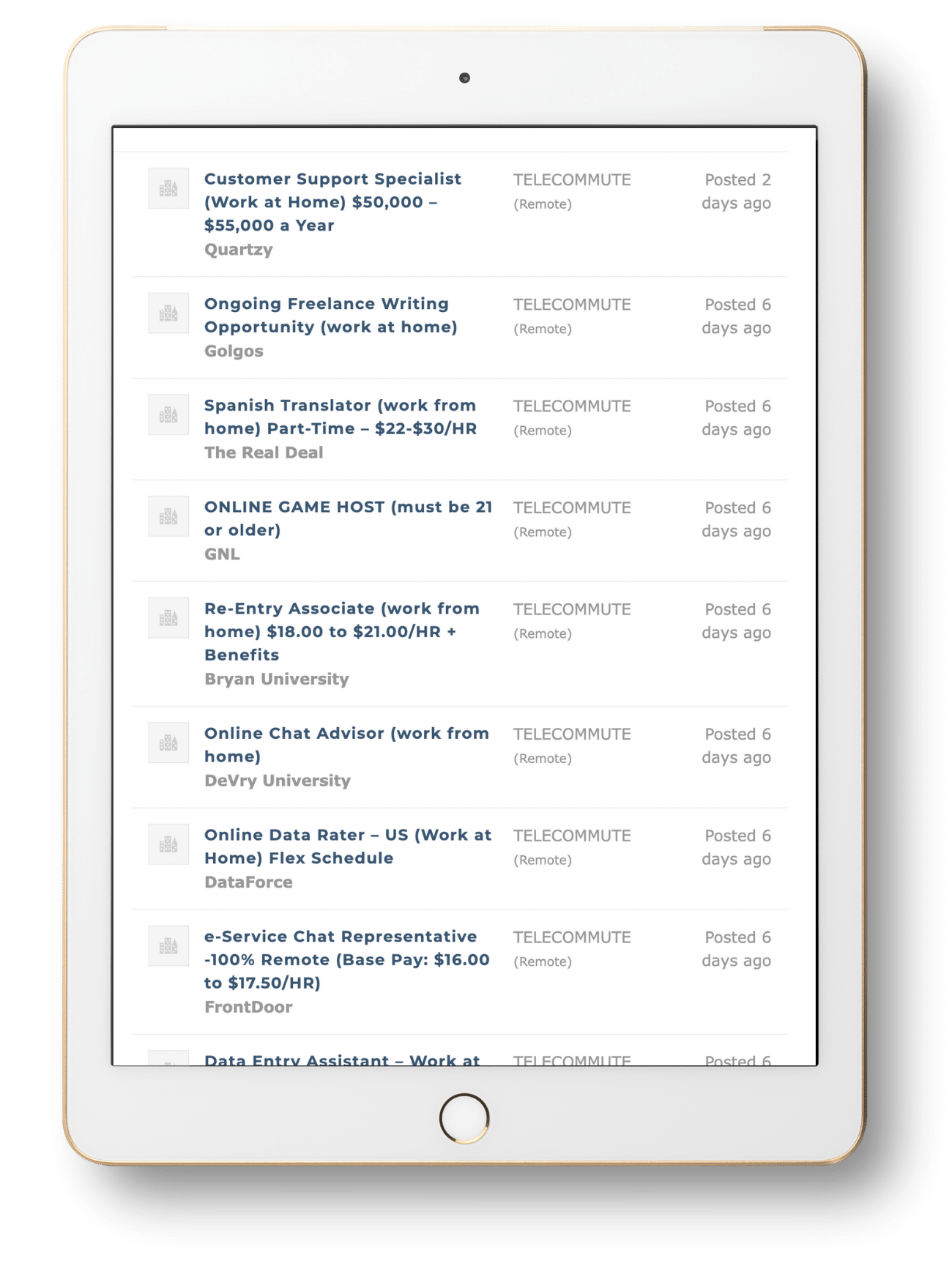
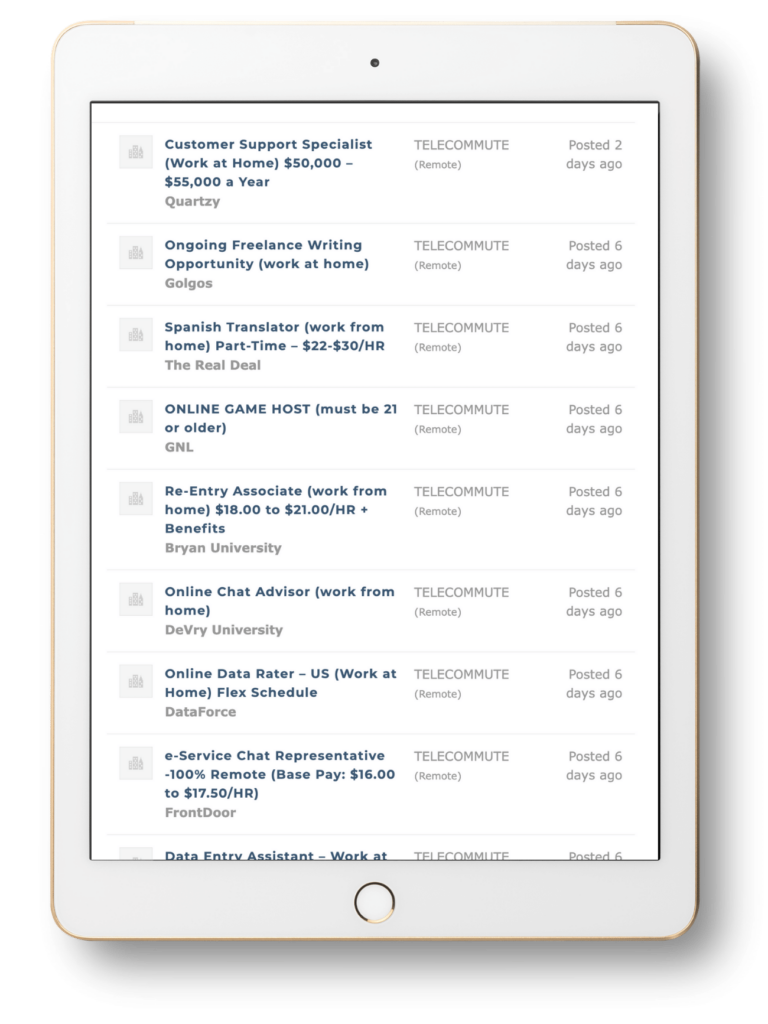
Get FREE Work-At-Home Job Leads Sent To Your Inbox
Plus get my list of 50+ job sites to search for remote jobs








Just to let you know, you have Quality Gal listed. This site is no longer available. I noticed this article originally posted in 2014, but it is coming across as new information. This is very misleading and frustrating when people are trying to look into these opportunities and they no longer exist.
@Kelly
Hi! Sorry about that – apparently they changed their name to Online Writing Jobs. I was unaware. I will make the update. I realize it can be frustrating – but please understand that I work full time and work alone on this blog. I do my very best – but it can be hard to keep everything current at every moment :-)
Thank you for providing the web sites for these opportunities. I have been looking for a few weeks now and most sites I have went to would like a fee to start up. I have written down a few of the sites here and now I am going to spend time looking at each one and hopefully will be able to start a career as soon as possible. Again thank you for the great post.
Iam Interested in writing for your column or blogging a post about your business
@renee
Thanks for your interest in writing for my blog Renee. Right now I am not looking for any writing help, but I appreciate the offer.